
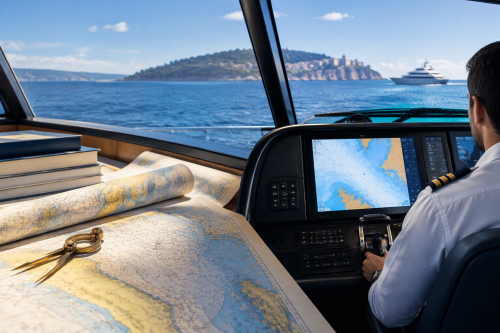
The paper chart era is ending. Superyacht captains and owners need to be asking whether the vessel’s digital setup is ready for the realities of modern navigation.
The end of paper is coming – but not just yet
Major hydrographic offices are actively retiring paper charts. NOAA has already fully discontinued paper nautical charts, and the UK Hydrographic Office (UKHO) is following suit, phasing out Admiralty paper products with a target completion date of 2030.
The extension from the UKHO’s original aggressive timeline came after widespread feedback from commercial operators and maritime organisations. The message, however, remains clear: paper is a temporary bridge, not a long-term solution. Individual low-demand charts are being withdrawn case-by-case, and the industry is being encouraged to complete its digital transition sooner rather than later.
The good news is that OpenC247.com continues to support paper, and we have found many of our customers like to have paper as a failsafe backup to digital. But superyacht captains need to be wise to the fact that the familiar paper folio may have a limited lifespan as a default fallback. And digital navigation isn’t optional, it’s a structural mandate.
The regulatory grey zone
Whether or not a superyacht requires an ECSIS is quote complex.
Under SOLAS Chapter V, ECDIS is generally required on passenger ships of 500 GT and above, and on cargo ships of 3,000 GT and above engaged on international voyages (subject to phase-in provisions for existing ships). Since SOLAS defines a passenger ship as one carrying more than 12 passengers, a commercial yacht carrying 12 or fewer passengers is generally treated as a cargo ship, meaning the relevant ECDIS threshold is 3,000 GT, not 500.
Yachts below that threshold, or those outside the scope of SOLAS altogether, may instead fall under flag-state or national requirements for electronic navigation systems.
This creates a grey zone. Many vessels rely on Electronic Chart Systems (ECS) or hybrid setups that may or may not meet evolving compliance expectations. For commercially registered yachts, keeping an eye on digital compliance frameworks, including the upcoming S-100 hydrographic standards, is worthwhile. It’s worth noting that existing ECDIS doesn’t need to be replaced and type-approved S-100 systems aren’t expected until around 2028.
The real friction points
The shift to digital brings undeniable benefits, but it also introduces friction that rarely gets discussed in marketing brochures. These are some of the pain points captains and officers deal with daily, which are worth understanding if you’re considering a move to digital.
Alarm fatigue and screen clutter
Modern ECDIS and ECS platforms are packed with alerts. Safety contour crossings, zone entries, sensor variances… the system sounds alarms for everything. When many things trigger a warning, there’s a risk that critical hazard alerts get lost in the noise. Maritime research consistently shows that alarm fatigue is a genuine safety concern on digital bridges. It’s something to be aware of.
Permit and licensing headaches
Unlike static paper charts, digital ENCs rely on permits, expiration dates and licensing keys. Superyachts frequently change itineraries at short notice, an owner’s last-minute request to divert to a new anchorage can send the bridge team scrambling for chart coverage.
Waiting on permits, wrestling with licensing software at midnight, or facing “out-of-date chart” warnings before an inspection are realities most captains know all too well. OpenC247.com
Permits and OpenC247
Instant availability: Permits are available for download instantly after purchase, with 24/7 access via PC, smartphone, or tablet. This means captains don’t have to wait on distributors or work around office hours when itineraries change unexpectedly.
Around-the-clock access: OpenC247 provides instant access to AVCS permits and digital publications around the clock. This is particularly valuable for superyachts operating across time zones or making last-minute route changes at unsociable hours.
Unlimited re-application: Users can access permits and files at all times and re-apply them to an ECDIS or licensed PC as many times as needed. This eliminates the stress of permit file management and helps keep charts and publications up to date for inspections.
No subscription required: The platform operates on a subscription-free model, so crews only pay for the charts they need without ongoing licensing commitments.
Loss of big-picture situational awareness
Studies into maritime incidents highlight a trend where bridge officers using digital systems tend to zoom in on local details and lose sight of the macro-level picture. Time spent navigating sub-menus is time not spent looking at what’s actually ahead of you. The very technology designed to enhance safety can, if poorly implemented, undermine situational awareness.
Training gaps and clunky interfaces
Standard ECDIS courses focus on passing certification – often rather than practical, intuitive operation. When every manufacturer’s interface works differently, onboarding new crew becomes slow and error-prone. Complex systems create hesitation at precisely the moments when confident decision-making matters most. It’s important to gain familiarity with your own ECDIS, and how to integrate charts from OpenC247, and ensure you have a documented process.
A simpler approach
These friction points aren’t inevitable consequences of going digital. They’re symptoms of platforms designed without the realities of superyacht operations in mind. OpenC247 was built to address exactly these challenges:
Streamlined licensing: Instant chart access and automated permit delivery mean last-minute itinerary changes don’t trigger compliance panic. No waiting on distributors, no wrestling with licensing keys at unsociable hours.
Easy-to-use platform: OpenC247’s straightforward interface makes purchasing charts, obtaining permits and planning routes quick and hassle-free, so you can spend less time on admin and more time focused on operations.
Helping you stay up to date: OpenC247 helps you keep charts and publications current for inspections, taking the stress out of managing your digital chart portfolio.
Designed for superyachts: Whether you’re on a 40-metre private yacht or a 90-metre commercially registered vessel, the platform scales to your operational reality, not the other way around.
The transition is happening, be ready
The withdrawal of paper charts isn’t a distant hypothetical. It’s underway. Hydrographic offices are defining the shift, and the vessels still relying on outdated charting setups are the ones most exposed to operational delays. While OpenC247.com continues to support paper and digital, we are led by the decisions around us.
The good news? The transition doesn’t have to be painful. With the right platform, going digital simplifies your workflow rather than complicating it.
Ready to see what stress-free digital charting looks like? Register free at OpenC247.com and explore the platform for yourself.