
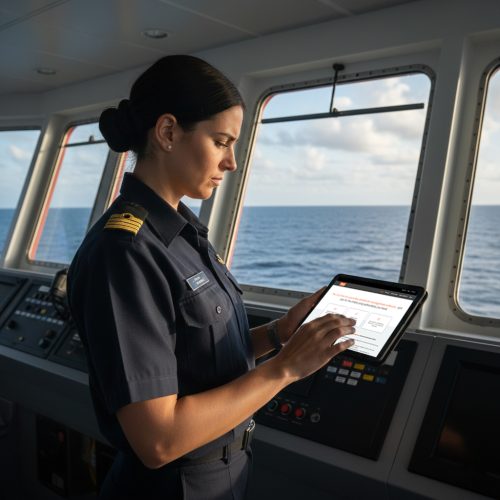
Picture this: you’re planning your next voyage, selecting charts, checking routes and suddenly realize that all your compliance documentation is already in order. No scrambling for certificates, no panic about chart updates, no marathon paperwork sessions.
This isn’t a captain’s fantasy; it’s what happens when navigation planning and compliance merge into one seamless process.
For too long, captains of many types of vessel – from commercial shipping and fishing boats to superyachts and research ships – have treated compliance as a separate burden; something to tackle after the real work of navigation is done. But what if compliance could simply happen as you plan your voyage?
The compliance burden: why captains struggle with SOLAS and PSC
Every captain knows the scenario: Port State Control (PSC) inspectors are coming aboard, and suddenly everyone’s searching for certificates, checking chart corrections, and hoping that obscure publication from 2019 is still valid.
SOLAS (Safety of Life at Sea) sets the international standards that keep vessels safe, covering everything from fire systems to navigation equipment. PSC inspections enforce these standards, with inspectors empowered to detain vessels that can’t demonstrate compliance. The stakes are high: detention means delays, costs and reputational damage. [You can read more about SOLAS and the Yacht Code at the end of this article, since some superyachts would follow this rather than SOLAS in its true form].
The traditional approach treats compliance as a parallel track to navigation. Maintain your charts here, track your certificates there, update your publications somewhere else. It’s exhausting, error-prone and pulls focus from what matters most: safe navigation.
How modern navigation tools transform compliance
Here’s the revelation: when you use a modern navigation platform like OpenC247, compliance becomes a natural byproduct of good voyage planning.
Instead of managing separate systems for charts, publications and certificates, everything flows through your navigation workflow.
Automatic chart selection eliminates coverage gaps
The old way: manually cross-reference routes with chart catalogs, hope you haven’t missed a transit zone, and pray the inspector doesn’t find that forgotten, outdated chart buried in your portfolio.
The modern way: import your route into a digital platform that automatically identifies every Electronic Navigational Chart (ENC) required. The system ensures complete coverage. No gaps, no guesswork, no compliance failures.
Traditional chart management requires maintaining massive inventories “just in case”. Result? Bridges cluttered with outdated materials, each one a potential PSC deficiency waiting to happen.
With pay-as-you-go navigation from OpenC247, you purchase only the charts needed for your specific voyage. Your bridge stays clean, your charts stay current, and compliance stays simple. No more explaining why you have that 2018 edition of a port you’ll never visit.
Digital permits available 24/7
Picture a last-minute destination change at 2 AM. Under traditional systems, you’re scrambling to contact suppliers, hoping someone’s available to issue permits before arrival.
OpenC247 can provide instant access to AVCS permits and digital publications around the clock. Compliance doesn’t depend on office hours. It’s available whenever your navigation plans change.
Turning PSC inspections from ordeal to opportunity
When compliance is built into your navigation workflow, PSC inspections transform from stressful ordeals into straightforward demonstrations of good practice.
Documentation lives where you need it
Instead of maintaining separate filing systems for navigation and compliance, everything lives in one portal. Planning a voyage? Your compliance certificates are right there.
Crew familiarity through daily use
PSC inspectors increasingly test whether crew can actually operate equipment, not just recite procedures. When your navigation and compliance tools are the same system used daily for voyage planning, crew familiarity happens naturally. They’re not cramming for inspections. They’re demonstrating tools they use every day.
H2: Real-world compliance challenges solved
So how can a ‘free’ portal like OpenC247 address the most common PSC deficiency areas?
Navigation equipment and chart updates
PSC finding: “Chart not updated to latest Notice to Mariners”.
Traditional response: Frantic checking of correction logs and manual updates.
Modern solution: ENC updates with digital proof of currency via OpenC247.
Documentation and certificates
PSC finding: “Unable to provide evidence of chart licenses”.
Traditional response: Searching through emails and paper files.
Modern solution: Instant access to compliance certificates and license history via OpenC247.
Voyage planning records
PSC finding: “No evidence of passage planning for intended voyage”.
Traditional response: Hastily prepared paper plans.
Modern solution: Digital route planning with automatic chart selection.
The superyacht advantage: flexibility meets compliance
Superyachts face unique challenges: spontaneous itinerary changes, aesthetic requirements, and varying regulatory frameworks. OpenC247 excels here by providing:
Instant adaptability: When the owner decides on a new destination, compliance follows automatically. Purchase new charts, receive permits, update documentation – all from a smartphone if needed.
Clean bridge aesthetics: No more chart tables cluttered with rarely-used publications if you utilise an ECDIS or PC-based chart reader. Everything digital, everything accessible, everything compliant.
Supporting navigational compliance: Whether operating under SOLAS, the Yacht Code, or transitioning between them, the same platform maintains compliance across regulatory regimes.
2026 and beyond: the evolving compliance landscape
Recent SOLAS amendments reflect the industry’s digital transformation. Container loss reporting, electronic inclinometers and updated GMDSS requirements all point toward data-driven compliance. Vessels using modern navigation platforms are already positioned for these changes.
The shift in PSC focus from mechanical checks to operational behaviour and digital record-keeping favours captains who’ve integrated compliance into their navigation workflows. When inspectors ask about cyber security plans or digital competency, vessels using digital navigation demonstrate both through daily operations.
Making the switch: from burden to byproduct
You may have two transitions to consider.
a) The transition from paper to digital navigation.
b) The transition from a subscription navigation solution to non-subscription like OpenC247.
Start with these steps:
Evaluate your current pain points: Where does compliance create the most stress? Chart updates? Documentation management? Certificate tracking? High chart fees through a subscription model?
Test modern alternatives: OpenC247 offers a pay-as-you-go model. It’s literally free to use, and you only pay for the charts or publications that you need for a voyage. You can try it for a single voyage before committing.
Measure the difference: Track time spent on compliance before and after. Most captains will see a reduction in administrative burden, not to mention cheaper charts and transparent billing.
Build crew confidence: When navigation tools handle compliance automatically, the crew can focus on seamanship rather than paperwork.
The bottom line: what’s not to like?
SOLAS and PSC requirements aren’t going away. If anything, they’re becoming more sophisticated. But the burden they create is optional. When you choose navigation tools that build compliance into voyage planning, regulatory requirements stop being obstacles and become simple checklist items handled automatically.
Modern navigators don’t see compliance as a separate task because it isn’t one. It’s what happens naturally when you plan voyages well, maintain current charts and use systems designed for today’s maritime reality.
Platforms like OpenC247 exemplify this approach, making the complex more simple by making compliance a side effect of good navigation.
For captains tired of the compliance treadmill, the message is clear: stop treating navigation and compliance as separate challenges. Use tools that merge them into one efficient workflow. When compliance happens automatically through your daily navigation routine, you’re free to focus on what really matters: the safe, efficient operation of your vessel.
That’s not just smart compliance. That’s modern seamanship. Visit our ‘How it works’ page to learn how pay-as-you-go navigation can transform your voyages. Or just go in and use the software. There’s no cost to use it – and it takes moments to register.
SOLAS versus the Yacht Code: understanding the difference
While SOLAS is the international convention that applies to commercial vessels worldwide, the Yacht Code represents a specialized framework designed specifically for yachts in commercial use.
The key distinction lies in their application: SOLAS applies to traditional commercial vessels like cargo ships and passenger vessels over certain tonnages, while the Yacht Code – whether the UK’s Red Ensign Group (REG) Yacht Code or similar frameworks – applies to yachts carrying no more than 12 passengers for commercial purposes.
The Yacht Code essentially translates SOLAS principles into practical requirements that recognize the unique construction and operation of luxury yachts, addressing challenges like interior design requirements, guest areas, and crew accommodation standards that don’t fit neatly into traditional commercial vessel categories.
For captains, this means a superyacht under 500GT in commercial operation typically follows the Yacht Code rather than full SOLAS, though many SOLAS principles still influence the yacht-specific regulations.